
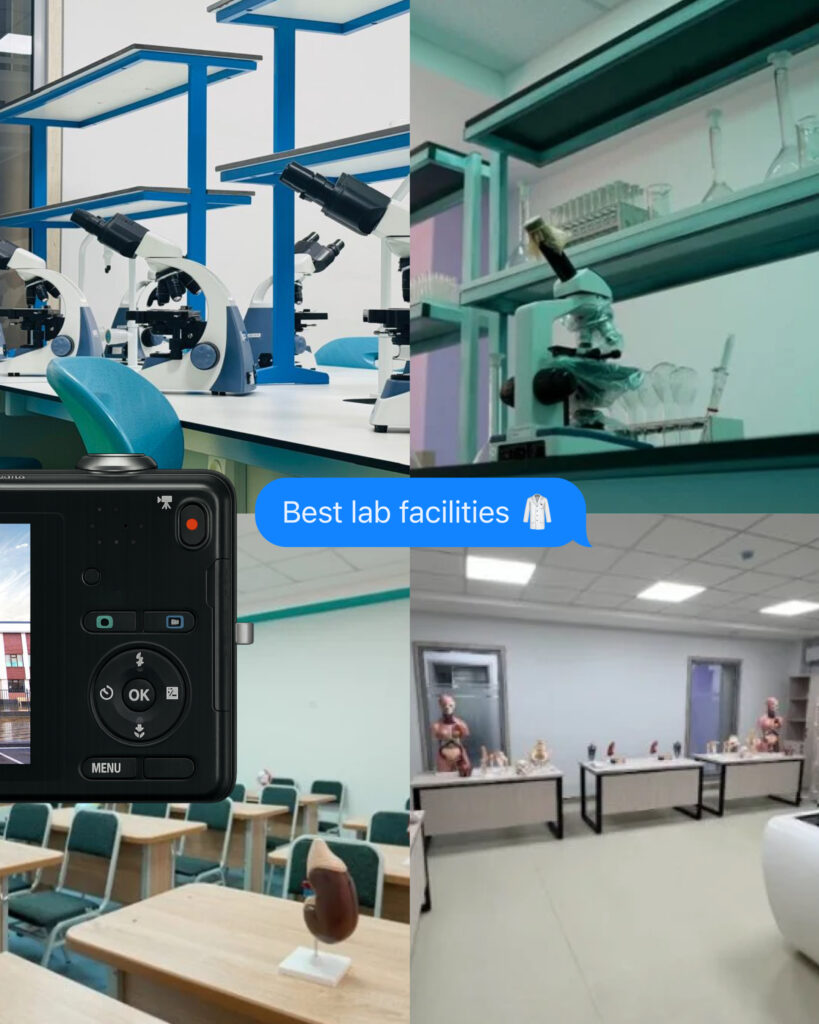
Choosing a foreign medical university? Before applying for MBBS abroad, one of the most important factors to evaluate is clinical exposure. A university may have modern laboratories, well-equipped classrooms and an impressive campus, but medical students also need structured opportunities to learn how healthcare works in real clinical settings.
For Indian students planning to study MBBS abroad, understanding clinical training, hospital access, patient interaction and supervised practical learning is essential before making an admission decision.
In this guide, we explain how to evaluate clinical exposure at a foreign medical university, which questions to ask before paying admission fees, and what Indian students should verify to make an informed decision.
What Is Clinical Exposure in MBBS?
Clinical exposure refers to the opportunities medical students receive to observe, understand and practise clinical skills under appropriate supervision in healthcare settings.
It helps students connect theoretical medical knowledge with the practical aspects of patient care.
Clinical exposure can include
- Observing doctors during patient consultatio and ward rounds.
- Learning how to take patient histories and conduct examinations under supervision.
- Understanding diagnostic procedures and laboratory investigations.
- Participating in clinical case discussions.
- Developing communication, professional ethics and patient-safety skills.
- Receiving supervised practical training in different medical specialities.
The exact activities available to students depend on their academic year, the university’s curriculum, hospital arrangements, local regulations and the level of supervision provided.
In simple terms: Clinical exposure helps medical students understand how classroom learning is applied in real healthcare environments.
Why Is Clinical Exposure Important When Studying MBBS Abroad?
Clinical training is an essential part of medical education. Students need opportunities to develop clinical reasoning, understand patient management and learn professional responsibilities alongside their theoretical studies.
1. It Connects Theory With Practical Learning
Studying anatomy, physiology, pathology and pharmacology provides the scientific foundation of medicine. Clinical learning helps students understand how these subjects relate to actual patient conditions.
For example, learning about respiratory diseases in a textbook is different from observing how a doctor evaluates a patient with breathing difficulties.
2. It Develops Communication Skills
Doctors must communicate clearly with patients, families and healthcare professionals. Clinical learning can help students understand how to take patient histories, explain medical information appropriately and maintain professional boundaries.
For international students, it is also important to understand the language used in local healthcare settings and whether language support is available during clinical training.
3. It Builds Clinical Reasoning
Supervised case discussions expose students to the process of evaluating symptoms, considering possible diagnoses and understanding treatment decisions.
Students should have opportunities to ask questions, receive feedback and learn from qualified clinical teachers.
4. It Helps Students Understand Different Medical Specialities
Clinical training should provide structured learning across relevant medical and surgical disciplines, rather than relying on exposure to only one department.
This helps students develop a broader understanding of medicine and prepare for subsequent clinical assessments and supervised training.
5. It Supports Long-Term Medical Career Preparation
Students planning to return to India after completing their medical education must consider the applicable National Medical Commission (NMC) requirements alongside the quality of their training.
Clinical exposure alone does not guarantee eligibility to practise medicine in India. The qualification, course structure, duration, internship arrangements and other applicable regulatory conditions must also be satisfied.
10 Factors to Evaluate Before Choosing a Foreign Medical University
Not sure how to assess a university’s clinical training? Use the following checklist before making your decision.
1. Verify the University’s Hospital Affiliations
One of the first questions to ask is where students receive their clinical training.
Find out whether the university has its own teaching hospital, formally affiliated hospitals or other documented clinical training arrangements.
Do not rely solely on statements such as “hospital attached” or “excellent clinical exposure.” Ask for specific details.
Questions to Ask
- What is the name of the teaching hospital?
- Is the hospital owned by the university or affiliated with it?
- Is the clinical training arrangement formally documented?
- Which academic years include hospital-based training?
- Are students permitted to attend clinical sessions as part of their curriculum?
A hospital partnership is useful only when students have genuine, structured access to appropriate clinical learning opportunities.
2. Understand When Clinical Training Begins
Ask the university when students begin clinical observation, clinical teaching and supervised practical training.
The timeline may differ between institutions and curricula. Some practical learning can take place in laboratories and simulation facilities before students progress to hospital-based training.
Do not assume that an early hospital visit automatically means extensive clinical training. Ask what students actually do at each stage.
Request the official curriculum or academic handbook showing the progression from preclinical subjects to clinical subjects.
3. Check the Range of Clinical Specialities
A comprehensive medical education requires exposure to a broad range of clinical disciplines.
Ask how the university organises training in areas such as:
- General Medicine
- General Surgery
- Paediatrics
- Obstetrics and Gynaecology
- Orthopaedics
- Psychiatry
- Ophthalmology
- Otorhinolaryngology (ENT)
- Dermatology
- Emergency and casualty services
- Community Medicine
The specific curriculum and training requirements should be checked against the applicable regulations.
Look for a structured rotation plan that explains which departments students attend, the duration of each rotation and the learning outcomes expected.
4. Evaluate Patient Interaction Opportunities
Patient interaction is an important aspect of clinical learning, but it must take place under appropriate supervision and with respect for patient consent, privacy and safety.
Ask how students progress from observing consultations to participating in permitted learning activities.
Questions to Ask
- Can students observe patient consultations?
- Are they taught how to take patient histories?
- Do clinical teachers supervise examination skills?
- Are students given feedback on their performance?
- How are patient confidentiality and consent maintained?
A university should be able to explain the educational activities students are permitted to undertake at different stages of training.
Remember that hospital attendance and hands-on clinical practice are not the same thing.
5. Assess the Quality of Clinical Faculty
Qualified and accessible clinical teachers play an important role in medical education.
Ask about the doctors responsible for teaching, the clinical departments involved and the supervision arrangements for students.
You can also ask current students whether clinical sessions are conducted regularly and whether teachers explain cases, answer questions and provide feedback.
The objective is not simply to count faculty members. It is to understand how clinical teaching is organised and how students receive guidance during practical learning.
6. Understand the Student-to-Teacher and Student-to-Patient Environment
The number of students attending a clinical session can influence how much individual attention each student receives.
Ask how clinical groups are organised, how students are allocated to departments and whether everyone receives opportunities to participate in scheduled activities.
Where relevant, ask about typical group sizes and how the university manages clinical teaching during busy hospital sessions.
Patient volume can provide context, but a high patient count alone does not prove that students receive better training. Supervision, case variety, teaching quality and opportunities to learn also matter.
7. Examine the Clinical Curriculum and Rotation Schedule
A university should be able to explain its clinical curriculum in a clear and verifiable manner.
Request documents that describe:
- The sequence of clinical subjects.
- The academic years in which clinical rotations take place.
- The duration of departmental postings.
- The expected clinical learning outcomes.
- Attendance and assessment requirements.
- Internship or clinical clerkship arrangements.
Check whether the course structure meets the regulatory requirements applicable to your admission year and intended future registration.
For Indian students, this step is particularly important because the NMC’s Foreign Medical Graduate Licentiate Regulations, 2021, specify requirements relating to foreign medical education, including course duration, clinical training and internship or clerkship arrangements.
Refer to the official NMC rules and regulations and seek clarification from the relevant authority when a requirement is unclear.
8. Ask How Clinical Skills Are Assessed
Clinical education should involve more than attending lectures or observing doctors.
Find out how the university assesses students’ practical knowledge and clinical competencies.
Depending on the curriculum and stage of training, assessment may include:
- Clinical case presentations.
- Practical examinations.
- Objective Structured Clinical Examinations (OSCEs).
- Patient-history-taking exercises.
- Simulation-based assessments.
- Departmental evaluations and clinical records.
Ask how often students are assessed and whether they receive feedback that helps them improve.
Assessment methods vary by university, so request the actual curriculum rather than assuming every institution follows the same system.
9. Speak to Current Students and Recent Graduates
Official university information is important, but conversations with current students can provide additional insight into how the published curriculum works in practice.
Try to speak with students from different academic years, particularly those who have already started clinical rotations.
Questions to Ask Current Students
- How regularly do clinical sessions take place?
- Which hospitals do students attend?
- Are clinical postings organised according to a schedule?
- Do students receive supervision during practical activities?
- How are clinical attendance and assessments recorded?
- What difficulties have students encountered during hospital training?
Where possible, verify their answers against official documents.
A single student’s experience may not represent the entire university, so look for consistent information from multiple sources.
10. Verify Internship Arrangements Before Admission
Internship arrangements deserve special attention because they affect both clinical training and future professional eligibility.
Ask the university to provide written details about the internship or clinical clerkship, including its duration, location, supervising institution and relationship to the medical degree.
For Indian students, the NMC’s Foreign Medical Graduate Licentiate Regulations, 2021, contain specific requirements relating to the duration and location of medical education, clinical training and internship. The rules applicable to an individual student may depend on the relevant regulatory provisions and circumstances.
Read the official regulations and the NMC’s current notices before committing to a programme.
Never rely solely on verbal assurances that an internship will automatically qualify you for medical registration in India.
Clinical Exposure vs. Practical Training: What Is the Difference?
These terms are related, but they do not always mean the same thing.
| Aspect | Clinical exposure | Practical clinical training |
| Main purpose | Observe and understand clinical practice | Develop and demonstrate clinical competencies |
| Typical activities | Ward rounds, consultations and case discussions | Supervised history-taking, examination skills and other permitted activities |
| Student involvement | May be primarily observational | More active participation within authorised limits |
| Supervision | Guided observation and teaching | Direct supervision and competency assessment where required |
| How to verify it | Timetable and hospital access arrangements | Curriculum, rotation records, supervision and assessment requirements |
The distinction matters because a university may offer hospital visits without providing the depth of structured training a student expects.
Always ask what students are expected to learn and demonstrate, not just where they are taken.
How Can Indian Students Verify Clinical Training Requirements for MBBS Abroad?
Indian students should assess the quality of clinical exposure and verify regulatory compliance as two separate but equally important steps.
1. Course Duration
Confirm the total duration of medical education and whether it satisfies the applicable NMC requirements.
2. Medium of Instruction
Verify the prescribed medium of instruction and ask how students communicate with patients during clinical training.
3. Clinical Training
Obtain the official curriculum and details of hospital-based training, including the required clinical subjects and training arrangements.
4. Internship or Clerkship
Confirm the duration, location and structure of the internship or clerkship, as applicable under the regulations governing your admission.
5. University and Programme Details
Verify the exact institution, campus, medical programme and the relevant local authorisation or registration requirements.
6. Current Regulatory Guidance
Review the latest official NMC rules and notices. Do not assume that information published several years ago remains sufficient for a new admission decision.
The NMC’s advisory dated 1 April 2026 concerning Indian students seeking admission to undergraduate medical programmes in Uzbekistan highlights the importance of checking course duration, medium of instruction, curriculum, clinical training and internship or clerkship arrangements.
Read the official NMC advisory on foreign medical admissions in Uzbekistan if you are considering a programme in Uzbekistan.
This is a reminder to evaluate the specific institution and programme carefully, rather than assuming that all universities in a country have identical arrangements.
Red Flags to Watch for Before Taking Admission
Be cautious if a university or admission representative:
- Cannot identify the hospitals where clinical training takes place.
- Provides no written curriculum or clinical rotation schedule.
- Makes broad claims about hands-on training without explaining what students actually do.
- Cannot clarify the qualifications or supervision arrangements of clinical teachers.
- Gives vague or contradictory information about internship requirements.
- Promises guaranteed medical registration or a guaranteed licensing examination result.
- Pressures you to pay fees before you have had an opportunity to verify important details.
These signs do not automatically establish that a university is unsuitable, but they indicate that you should request further documentation and independent verification before proceeding.
Documents to Request Before Paying Admission Fees
Use this checklist when contacting a foreign medical university.
- ☐ Official medical curriculum and course-duration details.
- ☐ Hospital affiliation or clinical training documentation.
- ☐ Clinical rotation schedule and list of relevant departments.
- ☐ Details of clinical faculty and supervision arrangements.
- ☐ Practical assessment and attendance requirements.
- ☐ Written internship or clinical clerkship policy.
- ☐ Complete tuition and additional-fee structure.
- ☐ Information about the programme’s applicable local authorisation and registration requirements.
- ☐ Relevant official regulatory guidance for Indian students.
- ☐ Written clarification of any admission promises that affect your decision.
Keep copies of the documents and compare the information across official university sources before making a financial commitment.
Frequently Asked Questions (FAQs)
1. How do I check clinical exposure at a foreign medical university?
Request the official curriculum, clinical rotation schedule, hospital affiliation details and information about supervised practical training. Speak with current students and verify the university’s written information before paying admission fees.
2. Is a university’s own hospital necessary for good clinical exposure?
Not necessarily. A university may provide clinical training through its own teaching hospital or through appropriate affiliated institutions. What matters is whether the arrangements are documented, suitable for the curriculum and provide students with the required supervised learning opportunities.
3. When should MBBS students start clinical training abroad?
The timeline varies according to the university’s curriculum and applicable requirements. Ask for the official academic plan showing when clinical subjects, hospital postings and supervised practical activities begin.
4. Does a large teaching hospital guarantee better clinical exposure?
No. Hospital size and patient volume alone do not establish the quality of clinical education. Students should also assess teaching quality, access to clinical departments, supervision, learning objectives and practical assessment.
5. How can I check whether an MBBS programme meets NMC requirements?
Review the current Foreign Medical Graduate Licentiate Regulations and relevant NMC notices. Verify course duration, medium of instruction, curriculum, clinical training, internship or clerkship arrangements and other applicable conditions. Seek clarification from the relevant authority where necessary.
6. Can I rely on an admission consultant’s promise about clinical training?
Treat verbal assurances as a starting point for further questions, not as proof. Ask for official documentation from the university and independently verify the details that matter to your education and future registration.
7. Is clinical exposure important when choosing MBBS in Russia or Uzbekistan?
Yes. Students considering either destination should assess the specific university’s curriculum, hospital arrangements, clinical teaching, supervision and internship structure. Do not assume that every institution within the same country offers identical training.
8. Does good clinical exposure guarantee that I can practise medicine in India?
No. Good clinical training is important, but it does not independently establish eligibility for medical registration. Graduates must satisfy the applicable regulatory, qualification and licensing requirements in force for their circumstances.
Final Thoughts: Evaluate the Training, Not Just the University Brochure
Choosing a foreign medical university is a significant educational and financial decision. While tuition fees, accommodation and campus facilities matter, clinical training deserves equally careful consideration.
Before applying, understand where clinical training takes place, when it begins, how students are supervised, which specialities they cover and how their practical competencies are assessed.
Most importantly, verify the complete medical programme and its applicable regulatory requirements before paying admission fees.
At Aacharya Education, we encourage students and parents to approach MBBS admission decisions with informed questions, proper documentation and careful university research.
Planning to study MBBS abroad? Explore your options, compare universities carefully and seek guidance before making your final decision.
Apply with Aacharya Education to take the next step towards informed MBBS admission planning.
Disclaimer: This article is for educational and informational purposes only. Regulations can change, and eligibility requirements may vary according to a student’s circumstances and admission date. Always consult the latest official NMC notifications and the relevant university documentation before making an admission decision.